Showing posts with label Picture Study. Show all posts

Friday, February 17, 2012

Picture Study - Caravaggio

Over the last two years, we have been attempting to make our co-op more Charlotte Mason friendly. We have incorporated picture studies that seem to be a big hit.


During our winter sesssion, we are studying Caravaggio. I will caution you that if you choose to do this artist, he has produced some very graphic works. Lots of beheadings in particular. So I sorted through the paintings and found these four that I felt were "family friendly". Each is filled with symbolism and it has been a joy to explore each piece with the kids at the co-op.


To go along with each work, I have made copywork pages that I leave out at the co-op for parents to take if they wish.


Caravaggio was an Italian artist with tremendous influence on the Baroque Period. Each of the paintings is a depiction of a Bible story from the New Testament, so it seems natural to incorporate scripture with each of the pieces.

· Adoration of the Shepherds ~ Luke 2:8-18


Symbolism includes:


  • Bare feet - walking on holy ground

  • Rock on the ground - Earth (Jesus came to Earth)

  • Linen in basket - Death shroud (Jesus came to die)

  • Bread in baske - Bread of life

  • Carpenter's tools - Jesus earthly occupation


· Rest on the Flight to Egypt ~ Matthew 2:13-15

This picture is divided in half. The left half symbolizes the earthly. The right side symbolizes the heavenly.

Symbols include:


  • Three-leafed plant - the holy trinity

  • Rocks on the ground - Earth (Jesus came to Earth)

  • Oak tree - I'm sure this is a symbol, but I don't know what it means

  • Bare feet - holy ground


Calling of St. Matthew ~ Matthew 9:9
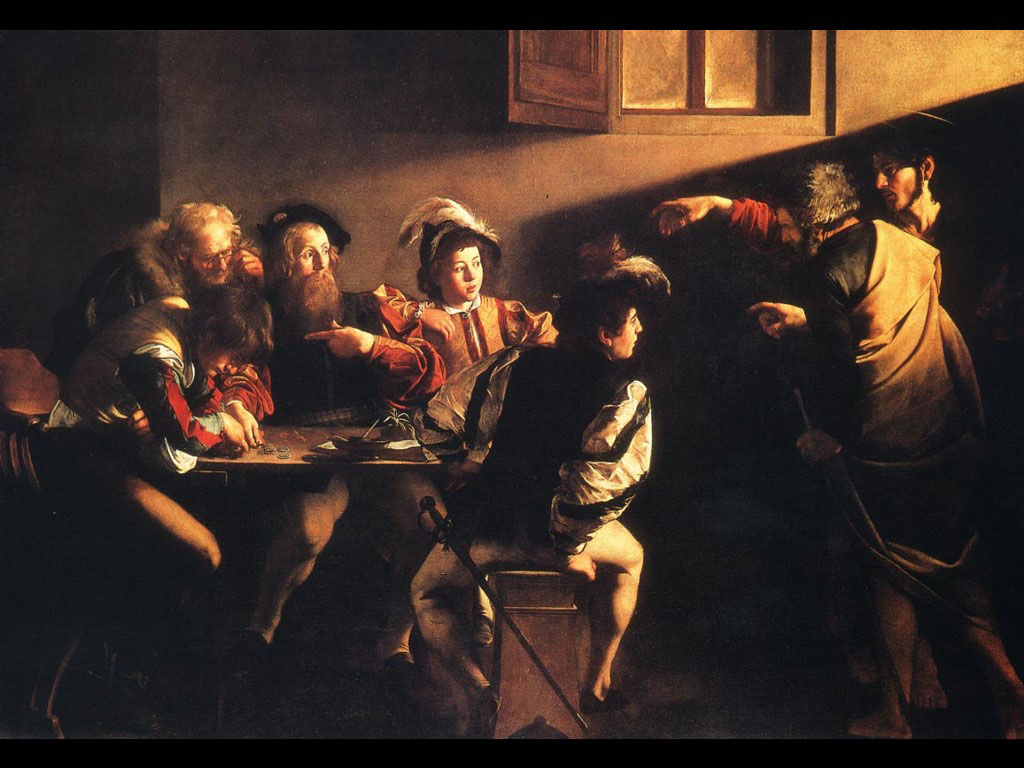

Jesus is calling Matthew to follow him. The tax collectors on the far left don't seem to notice Jesus and will miss out on all that Jesus brings. They are entirely too focused on their money. The youth in the middle of the piece seem a little startled, but interested. The room seems somewhat dark, but those looking toward Jesus have a light cast on their faces. Jesus is the light of the world.


Supper at Emmaus (1601) ~ Luke 24:13-35


Jesus is clean shaven, which makes him unrecognizable. This is the moment when Jesus is recognized. His followers are astonished, yet the man who is serving the meal doesn't seem surprised. I'm certain each food item on the table has some significance, but am unable to find what it is. The white tablecloth would indicate purity. I am continuing to research this piece to try to find the symbolizm that might be included in it.


Caravaggio was known to have a violent temper and ran for his life from many towns around Italy*. His general disposition may explain why so many of his works contain violent subjects such as beheadings and crucifixions. The four pieces we will focus on are more family friendly and are rich with symbolism.


Wednesday, October 27, 2010

Pieter Bruegel


During the fall session of our mini co-op, we did picture studies of Pieter Bruegel the elder. This was something new we added to the co-op this year as we are trying to gear our co-op toward Charlotte Mason.

I feel that the picture study was good to have. We started each co-op meeting with opening exercises (prayer, Pledge of Allegiance, a song and announcements). The nursery was dismissed and we began our picture study.


Each child ages 4 and up was given a copy of the picture face down. When I gave the signal, everyone turned their picture over to study it in silence. No talking is allowed at this time. They get about 90 seconds to 2 minutes to carefully examine their picture. Then I asked them what they see in the picture. Hands shoot up as everyone is eager to share what they see. I will tell them what I know about the picture. For example, Pieter Bruegel painted a work entitled "Census at Bethlehem". Kids will see so many things going on in the picture, but when I tell them the picture depicts a Bible story, I can hear the ooo's and aahh's in the room.


When our discussion is over, I dismiss the 4 to 6 year olds to their class (only because this is a non-writing group) and I pass out a notebook page along with a smaller copy of the picture we are studying and ask the kids to write whatever they want about the picture. It can be a list of words or a paragraph or anything in between, but they must write something. When they ask, I (or another parent) helps with spelling.


Here are the 4 pictures we studied this fall.


Peasant Wedding


Census at Bethlehem


Haymaking

Children's Games